

Break the Silence: respect, safety and speaking up
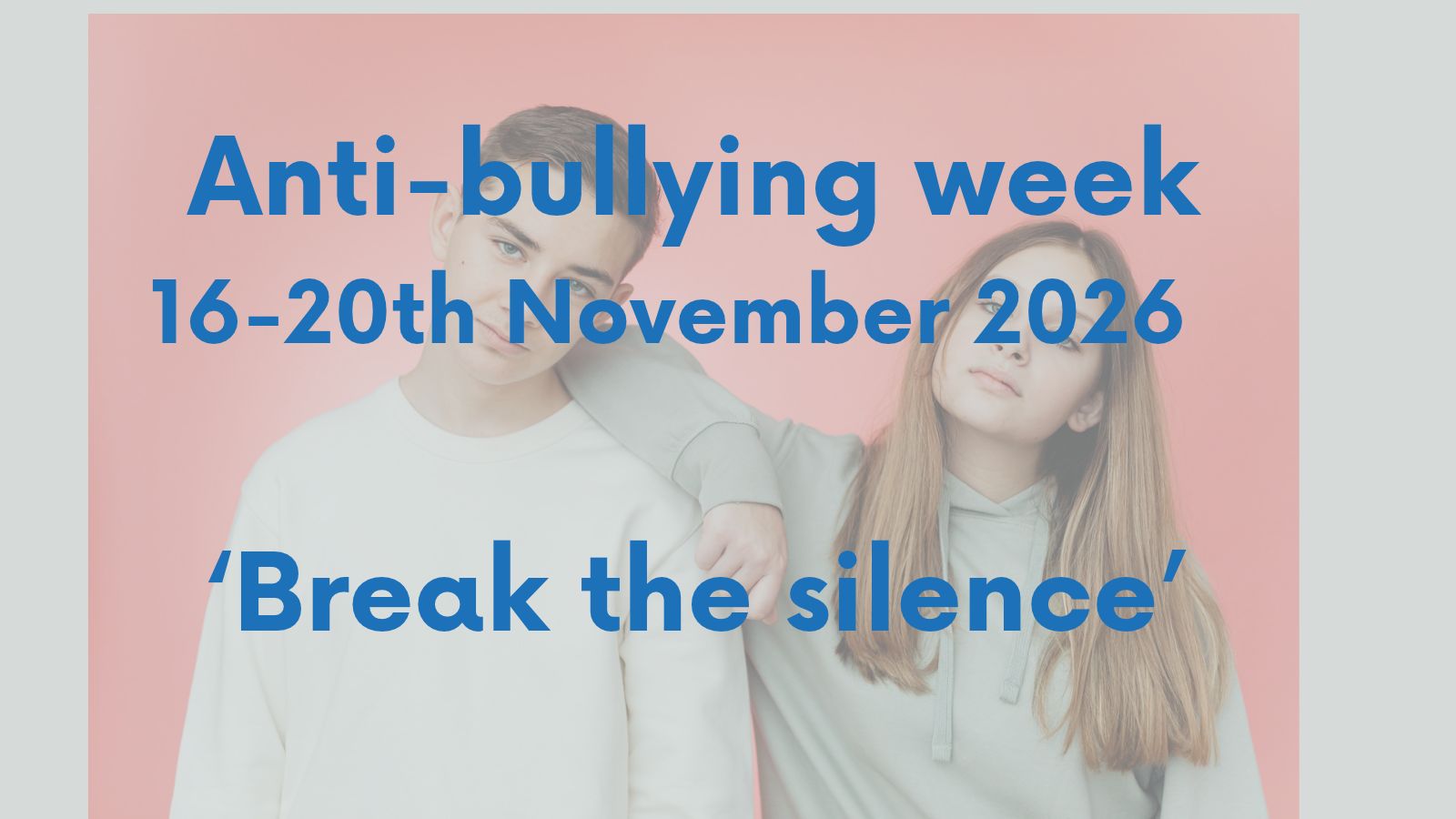
Anti-Bullying Week runs from Monday 16 to Friday 20 November and starts with Odd Socks Day. The Anti-Bullying Alliance shaped this year’s theme with more than 200 children and young people, and the message is simple: talk about bullying, listen, and act together. Nobody should feel they are facing it alone.
Students in schools and colleges complete our ‘How Are You?’ student voice survey using Chameleon PDE resources. Unlike most other providers, we can give each setting its own results alongside our amalgamated data, offering powerful insights into students’ perceptions and behaviours over time. The survey has always featured questions about bullying, and our latest results, from 12,813 students in 2024–26, tell a familiar story. Verbal bullying is still far more common than physical or online bullying: around 1 in 3 students aged 11–14 experience it sometimes or often, unchanged from 2023/24. This year we also asked students how common they think bullying is. Unlike vaping or drinking, which students routinely overestimate, verbal bullying is underestimated. Post-16 students think a quarter of their year group have been verbally bullied in the past year, when 36% actually have. That gap is the silence in action: if hurtful comments are dismissed as ‘banter’, they are not recognised as bullying, let alone reported.
When we added questions about respect, teachers told us they wanted to understand how respectful students felt towards each other and staff. Some of this stemmed from concerns about increasing levels of misogynistic and other disrespectful comments. Schools also felt that a more subtle approach to questioning would be preferable to blatant questions about misogyny. The result was three questions asking students to what extent they agreed that there is:
1. Peer-to-peer respect in their school/college
2. Mutual respect between students and staff
3. Staff are considered good role models
The good news is that respect has improved at every age since 2023/24. Two-thirds of 11–14-year-olds (67%) now agree that students treat each other with respect, rising to 87% post-16, and around three-quarters of 11–16-year-olds see staff as good role models. But that still leaves around a third of younger students who do not feel their peers are respectful.
Reporting is improving too. Almost 9 in 10 students know how and where to report bullying and abuse, and confidence to report has risen in every age group. The reasons students give for staying silent are telling. For 11–16-year-olds, fear of backlash from other students is the main barrier. ‘Staff won’t do anything’ has risen among 11–16s and is now the top reason given by 16–18 year olds, and more students in every age group feel they would not be taken seriously.
The differences between boys and girls matter here. Overall confidence to report is similar, but the barriers are not. Backlash from peers is the top concern for boys at every age, while girls are more worried about what happens next: 30% of 16–18 girls who lack confidence give this reason, compared with 18% of boys. Girls aged 14–16 are the group most likely to say staff won’t do anything (33%), and girls experience more online bullying at 11–14 (17% compared with 12% of boys). If we want girls to break the silence, they need to trust that speaking up will be handled carefully, and that something will change.
This is not just a question for individual schools. In Scotland, the First Minister has described violence against women and girls as a national emergency and has committed to introducing education about misogyny in every school. In October, the Scottish Government announced a new Respect Fund, with up to £1 million from 2027/28 for secondary pupils to access programmes on rejecting misogyny, and age-appropriate learning on respect for primary pupils. A Misogyny Bill is promised before the 2027 summer recess, giving women and girls specific legal protection from harassment, and the ‘Don’t Be That Guy’ campaign has been refreshed with well-known sportsmen asking men to change their behaviour.
Whatever part of the UK your setting is in, the direction of travel is clear. Misogyny is increasingly being treated as a safety issue, not simply a behaviour issue, and the word being used to tackle it is the same one schools told us they wanted to measure: respect. Our data also shows the challenge of reaching the boys these programmes are aimed at. At 16–18, 86% of girls find PSHE useful compared with 69% of boys, and 27% of boys say it is not useful at all. Engaging boys, rather than simply talking at them, will be key.
Social media remains a big part of the picture. Fewer students than in 2023/24 told us they had seen or experienced something online that made them anxious, worried or scared, but it is still around 4 in 10, and it rises with age. Girls are consistently more affected, by 8 to 13 percentage points at each age: 46% of girls aged 14–16 report this, compared with 32% of boys. The content ranges from inappropriate material to personal comments, but the recurring theme is a lack of respect for how the recipient will feel. Scotland’s campaign aimed at boys aged 11 to 18 makes the same point: sexist content online is never harmless, and it causes real-world harm to girls, including the ones they know. The silence we need to break is not only the victim’s. It is also the bystander who scrolls past, laughs along or forwards it on.
Primary school children are also experiencing disrespectful online interactions, often on platforms that, in theory, they are too young to be using. We have been developing the primary version of the ‘How Are You?’ survey, and primary schools have been very keen to include questions that help them understand how well children grasp what it means to be respectful towards each other and adults. It is encouraging to see this reflected nationally, with respect now named as a priority from primary age upwards.
Of course, in PSHE/wellbeing lessons, the starting point is always highlighting the ground rules that make the learning environment safe and respectful, and returning to them as often as required. There is no reason this should not be the starting point for every lesson. Breaking the silence starts with students knowing who they can talk to, trusting that they will be listened to, and seeing adults act on what they hear. If students feel safe and behave respectfully towards peers and staff, the knock-on effect is likely to improve teacher wellbeing too!
Sources
• Children suffering bullying in silence as Anti-Bullying Week 2026 launches “Break the Silence” theme – National Children’s Bureau
• Anti-Bullying Week 2026 dates and theme – Awareness Days
• Swinney to introduce misogyny education in every school in Scotland – BBC via Yahoo News, 30 September 2026
• Action against misogyny – Scottish Government via WiredGov, October 2026
• Online Safety Taskforce Action Plan 2026/27 – Scottish Government